Can You Put Aluminum Foil in an Air Fryer?
Quick Answer
Yes, you can use aluminum foil in an air fryer, as long as you follow three basic rules: it should never touch the heating element, it needs to be weighted down by the food so the airflow doesn’t blow it around, and it shouldn’t come into contact with highly acidic foods (tomato, citrus, vinegar). Following these guidelines, aluminum foil is a safe and useful tool for easier cleanup and protecting delicate foods.
Is It Safe to Use Aluminum Foil?
Yes, it’s safe as long as it’s used correctly. An air fryer basically works like a small oven with a very powerful fan: hot air circulates at high speed around the food, and that circulation is exactly what creates the crispy effect. Aluminum foil itself isn’t dangerous, but it can interfere with that airflow if placed incorrectly, or become a hazard if it comes into direct contact with the heating element.
Several cooking experts agree that foil is safe as long as it never touches the heating element, since that could cause sparks, smoke, or even damage the appliance. It’s also important to avoid letting foil come into contact with highly acidic ingredients at high temperatures, since that reaction can affect both the flavor of the food and the integrity of the foil itself.
An important tip: always check your air fryer’s manual before using foil. Not every manufacturer allows it in the same way, and if the manual explicitly advises against it, it’s best to respect that guidance and choose an alternative instead.
When You Can Use It
Aluminum foil is especially useful in these situations:
- Foods that drip or release fat — like chicken marinated in a sticky sauce or glazed salmon, where it makes cleanup much easier.
- Delicate foods that could break apart or stick — fish, melted cheese, or anything that tends to crumble when handled.
- Small pieces that could fall through the basket — like small chopped vegetables or other very light foods.
- Recipes that need slower or more even cooking — stuffed peppers, for example, benefit from partial wrapping so they cook through without burning on the outside first.
- General easier cleanup — lining the bottom of the basket cuts down significantly on the scrubbing you’ll need to do afterward.
When You Should NOT Use It
There are situations where it’s best to skip foil altogether:
- With highly acidic foods — tomato, citrus, vinegar, or acid-based marinades can chemically react with aluminum at high temperatures, affecting both flavor and the safety of the foil.
- To cover the entire basket — this blocks the airflow the air fryer needs to work properly (more on this in the next section).
- If your manual explicitly advises against it — depending on the appliance’s specific design, some manufacturers don’t recommend it; in that case, it’s best not to risk it.
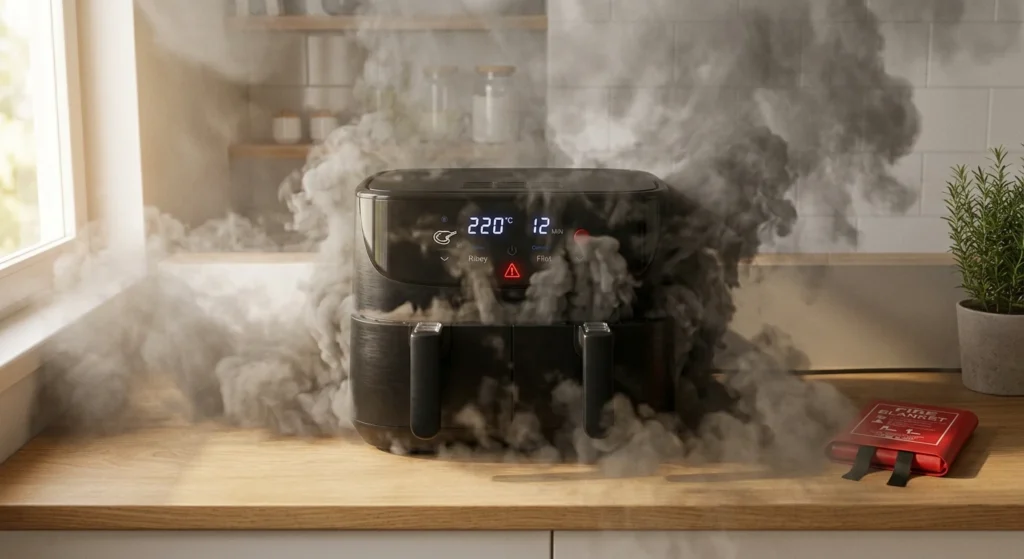
- When the foil is left loose without anything weighing it down — the high-speed air can lift it and cause it to touch the heating element, with a real risk of it burning or even producing smoke.
How to Place It Correctly
Follow these steps to use foil safely:
- Place it flat and centered at the bottom of the basket, away from the side walls and the heating element.
- Put the food on top so it acts as a weight and keeps the foil from moving during cooking.
- Leave open space around the edges of the basket — it shouldn’t reach all the way to the outer rim.
- Use heavy-duty foil if you have it on hand, since it’s less prone to tearing or blowing around.
- Never place it loose or crumpled with nothing on top — that’s the most common way it ends up touching the heating element.
Does It Affect Airflow?
Yes, and this is the most important point to keep in mind. Aluminum foil is a physical barrier to hot air, so wherever you place it, the air won’t be able to flow as freely. This isn’t necessarily a bad thing — in fact, it’s sometimes used intentionally to slow down cooking in a specific spot — but if you place it carelessly, it can cause food to cook unevenly, with some parts overdone and others underdone due to poor circulation.
The key is being aware of this effect and using it to your advantage: cover only what’s necessary, never the entire basket, and think of foil as a tool that modifies airflow, not one that “doesn’t affect anything.”
Can You Cover the Entire Basket?
No, and this is something a lot of people get wrong when they’re starting out. Covering the whole basket with foil almost completely blocks the circulation of hot air, which is the main mechanism that lets the air fryer cook and achieve that crispy result. If you cover the entire surface, the food is likely to cook much more slowly than expected, unevenly, or may not brown at all.
Several cooking experts agree on one key recommendation: always leave an open margin around the edges of the basket, without covering it completely, so air can keep circulating normally.
Aluminum Foil vs. Parchment Paper
Both have their place in the air fryer, but they’re not interchangeable in every situation:
| Aspect | Aluminum Foil | Parchment Paper |
|---|---|---|
| Retains heat | Yes, helps cook more evenly | No, more neutral |
| Reacts with acidic foods | Yes, can alter flavor | No, it’s inert |
| High-heat resistance | Very high | High, but limited depending on the brand |
| Best for | Fatty, glazed, or dripping foods | Foods aiming for maximum crispiness |
| Airflow | Blocks more | Usually perforated, blocks less |
In short: if you’re after maximum crispiness and want to interfere as little as possible with airflow, air-fryer-specific parchment paper (with perforations) is usually the better choice. If what you need is to contain fat, juices, or sticky sauces, or cook something more gently, foil does that job better.
Frequently Asked Questions About Aluminum Foil in the Air Fryer
Can aluminum foil damage my air fryer? Only if it touches the heating element directly or comes loose and gets blown toward the hot parts of the appliance. If you place it flat, centered, and with food weighing it down, it poses no risk to the appliance.
Why shouldn’t I use foil with tomato or lemon? Highly acidic foods can chemically react with aluminum at high temperatures, which can slightly alter the flavor of the dish and degrade the foil itself. It’s not a serious one-off risk, but it’s best avoided.
Can I line the entire basket with foil to avoid cleaning it? It’s not recommended. Covering the entire surface blocks airflow, which is exactly what makes the air fryer cook properly. It’s better to line only the area you need, leaving open space around the edges.
What happens if the aluminum foil touches the heating element? It can burn, produce smoke, or in more extreme cases, cause sparks or damage the appliance. That’s why it’s so important to keep it flat, centered, and weighted down with food so it doesn’t move.
Is it better to use the shiny side or the dull side of the foil? There’s no real performance difference between the two sides — it’s a fairly common myth. Both sides work exactly the same when cooking.
Can I use aluminum foil in any air fryer model? In most cases, yes, but it’s always worth checking your specific model’s manual. Depending on the internal design of the appliance, some manufacturers may explicitly advise against it.
Does foil make food less crispy? It can, if you cover a wide area, since it reduces airflow in that section. If you’re after maximum crispiness, it’s better to use air-fryer-specific perforated parchment paper instead of foil.
Can I fully wrap a food item in aluminum foil inside the air fryer? Yes, it’s a valid technique for foods that need slower or more protected cooking, like stuffed peppers. In this case, the goal is precisely to reduce direct contact with the hot air, so it’s not a problem.
Do I need oil if I’m using aluminum foil? Not necessarily, although a bit of cooking spray on the foil can help prevent food from sticking, especially with items like fish.
Does aluminum foil affect cooking time? Yes, slightly, since it reduces airflow in the area where you place it. If it’s your first time using it with a particular recipe, check for doneness a bit earlier than usual in case you need to adjust.
AirFryados Recipes Where Aluminum Foil Can Come in Handy
If you want to put these tips into practice, here are some recipes from our blog where aluminum foil can make cooking or cleanup easier:
- Whole chicken in the air fryer — useful for containing the juices it releases during cooking.
- Crispy air fryer chicken thighs — ideal if you’re using sticky sauce-based marinades.
- Air fryer salmon — fish is one of the foods where foil helps the most to prevent sticking or falling apart.
- Air fryer stuffed mushrooms — you can partially line the basket to make cleaning up any dripping filling easier.
- Spanish tortilla in the air fryer — foil doesn’t replace the mold, but it can help protect the base during cooking.